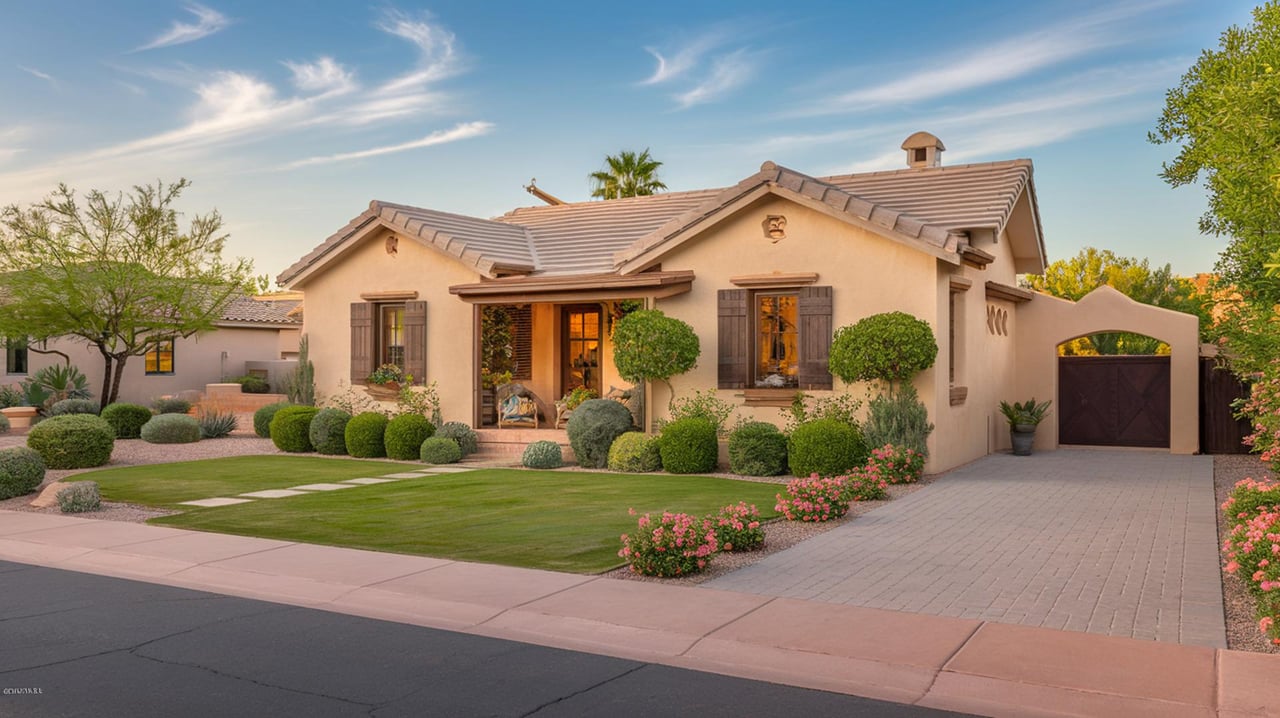
A seller in south Chandler and a seller three miles north can list nearly identical homes this fall, same square footage, same roof pitch, same 6 kilowatt solar array installed the same year, and get two different answers when a buyer's agent asks the obvious question: what's this system actually worth?
The panels aren't the variable. The utility is.
Chandler is one of the few cities in the Valley split between two power providers with genuinely different rules for solar. Arizona Public Service serves most of the north and west side of town. Salt River Project takes over as you move south and east. The boundary roughly tracks Price Road, and it cuts through neighborhoods that read as interchangeable on a listing sheet but behave differently the moment solar enters the conversation. Add a federal tax credit that Palmetto says disappeared for new solar purchases at the end of last year, and "the house has solar" stops being a bullet point and starts being a set of questions a seller needs answered before a sign goes in the yard.
The Line Nobody Prints on the Flyer
Downtown Chandler, the area around Chandler Fashion Center, and the corridor toward Gilbert Road tend to sit on APS. So does Chandler Viridian and the stretch near Arizona Avenue and Chandler Boulevard. Cross south and east, toward the Price Road corridor where communities like Fulton Ranch sit, and SRP more typically takes over. Most homeowners find out which utility they're on the first time they get a solar quote back with numbers they weren't expecting, not before.
That split matters because APS and SRP don't treat solar production the same way.
| APS | SRP | |
|---|---|---|
| Regulated by Arizona Corporation Commission | Yes | No, sets its own rates |
| On-peak window for solar customers | Roughly 3 hours | Roughly 6 hours |
| Billing structure | Energy-based, exported credit below retail rate | Includes a demand charge tied to peak draw |
| General Chandler footprint | North and west, including downtown | South and east, including the Price Road corridor |
The practical effect: a north Chandler home on APS with a high summer bill tends to see meaningfully faster payback from solar because the shorter peak window means panels are already covering the expensive hours before they hit. A south Chandler home on SRP with a comparable bill still saves, but the math depends more on system sizing and how usage lines up with SRP's longer peak stretch, since SRP layers in a demand charge tied to the single highest 15-minute draw of the day rather than billing on total energy alone. Two houses, same panels, same sun, different savings story for whoever buys next.
Not All Solar Is the Same Asset
The utility split explains why a system performs differently. It doesn't explain why some Chandler solar listings sail through escrow and others stall. That comes down to how the system was paid for.
Research on solar home premiums has generally landed around a 4 percent resale bump nationally, and installers marketing in Chandler point to figures in that same range for owned systems locally.
A leased system or a power purchase agreement is a different animal. The solar company still owns the equipment, as Solar Equity Solutions explains, and CAARAZ says the buyer has to qualify to take over the payment obligation, separate from and in addition to their mortgage approval. Many leasing companies also file a UCC-1 financing statement against the property to protect their ownership interest in the panels. That filing shows up during a title search, and it has to be released or formally transferred before closing or it can cloud the title entirely.
When a Chandler seller with a lease decides how to handle it, there are really three paths:
- Transfer the lease to the buyer. The most common route, and the one that requires the least cash out of pocket, but it depends entirely on the buyer qualifying with the solar company on the seller's timeline, not the buyer's.
- Buy out the remaining contract before closing. This converts a leased system into an owned one and clears the path for a cleaner sale, but payoff amounts vary widely by company and years remaining, and sellers should get that figure in writing well before listing.
- Negotiate an early cancellation or removal. Less common, and not guaranteed, but sometimes available if the system is underperforming or the leasing company is willing to work with the seller.
None of these happen overnight, and that's exactly where the paperwork changed last year.
The Addendum Got Longer Last November
Arizona REALTORS® revised its Solar Addendum in November 2025 after member feedback about how often solar transfers were derailing routine closing timelines. The updated form doesn't claim every solar sale will be delayed. It does open with a pointed instruction that wasn't in the prior February 2022 version, telling both sides not to assume a standard closing date will accommodate the actual transfer process.
Closing on a solar-equipped home now means clearing two separate approval processes, one from the bank and one from the panel company, and only one of them moves at a pace an agent can influence.
In practice, that means the seller should start the transfer process the moment a contract is accepted, not after inspections wrap up. The buyer should submit their application to the solar company right away and respond quickly to document requests. Industry estimates put a typical lease or PPA transfer at somewhere between two and six weeks once both parties are moving, which is longer than a lot of Chandler contracts leave for a routine 30-day close.
There's a second wrinkle layered on top from the same year. Federal legislation enacted in 2025 ended the 30 percent residential tax credit for solar systems bought with cash or a loan. That credit hasn't gone away for leased systems, since the leasing company still claims a commercial version of it and passes some of the savings through as a lower monthly payment, but a buyer who was hoping to purchase a Chandler home with existing solar and then buy the system outright no longer gets the same federal discount on that purchase that a seller may have gotten when the panels first went up. It's one more reason to have the ownership conversation early rather than assume it will sort itself out at the table.
What This Means If You're Listing This Fall
Pull the utility bill before you pull comps. Confirm whether the home is on APS or SRP, because that shapes how you should talk about the system's value in marketing and what a buyer's agent is likely to ask. If the system is leased or financed, request the exact payoff figure and lease terms from the solar company in writing now, not after an offer comes in. If you're not sure whether there's a UCC-1 filing against the title, a title company can check quickly, and it's far better to know before a buyer's lender finds it during underwriting.
Chandler's own city government leaned into solar at scale in 2025, with the city council approving a Master Energy Services Agreement with Ameresco for new solar installations across 23 municipal facilities. That civic momentum is a fine talking point for a listing's story. It's not a substitute for knowing your own system's paperwork.
What This Means If You're Buying a Solar-Equipped Resale
Ask which utility serves the address before you fall in love with a projected savings number, since a quote built for APS rates doesn't translate cleanly to an SRP account. Ask for the last twelve months of utility bills alongside the solar production numbers, so you can see what the homeowner is actually paying, not just what the system is capable of producing. And ask directly whether the system is owned, financed, or leased, because that single answer determines whether you're inheriting an asset or a contract, and how many extra weeks to budget before you can expect to close.
A Few Questions Worth Asking Directly
How do I find out if my Chandler address is on APS or SRP? Check a recent electric bill. It will name the utility directly, and both companies also let you confirm service territory by address on their websites.
Does owned solar always add value in a Chandler sale? Generally yes, since it transfers as an asset the way any paid-off home improvement does. A leased system doesn't carry the same guarantee, and in some cases it can narrow the pool of interested buyers if the payment obligation outweighs the utility savings.
How much extra time should I build into a closing if solar is involved? Budget for two to six weeks beyond a standard timeline if the system is leased or financed, and start the transfer paperwork the day the contract is signed rather than waiting for inspections to wrap up.
Solar is one more place where Chandler rewards a seller or buyer who does the homework early, and it's exactly the kind of detail that separates a smooth escrow from a last-minute scramble. If you're weighing a listing date or evaluating a resale with panels already on the roof, Kayla Kerulis can walk through what your specific address, utility, and system type mean for your timeline. Request a complimentary market consultation before you put a sign in the yard.
This article is general information, not legal, tax or financial advice. Consult a qualified professional about your situation.